

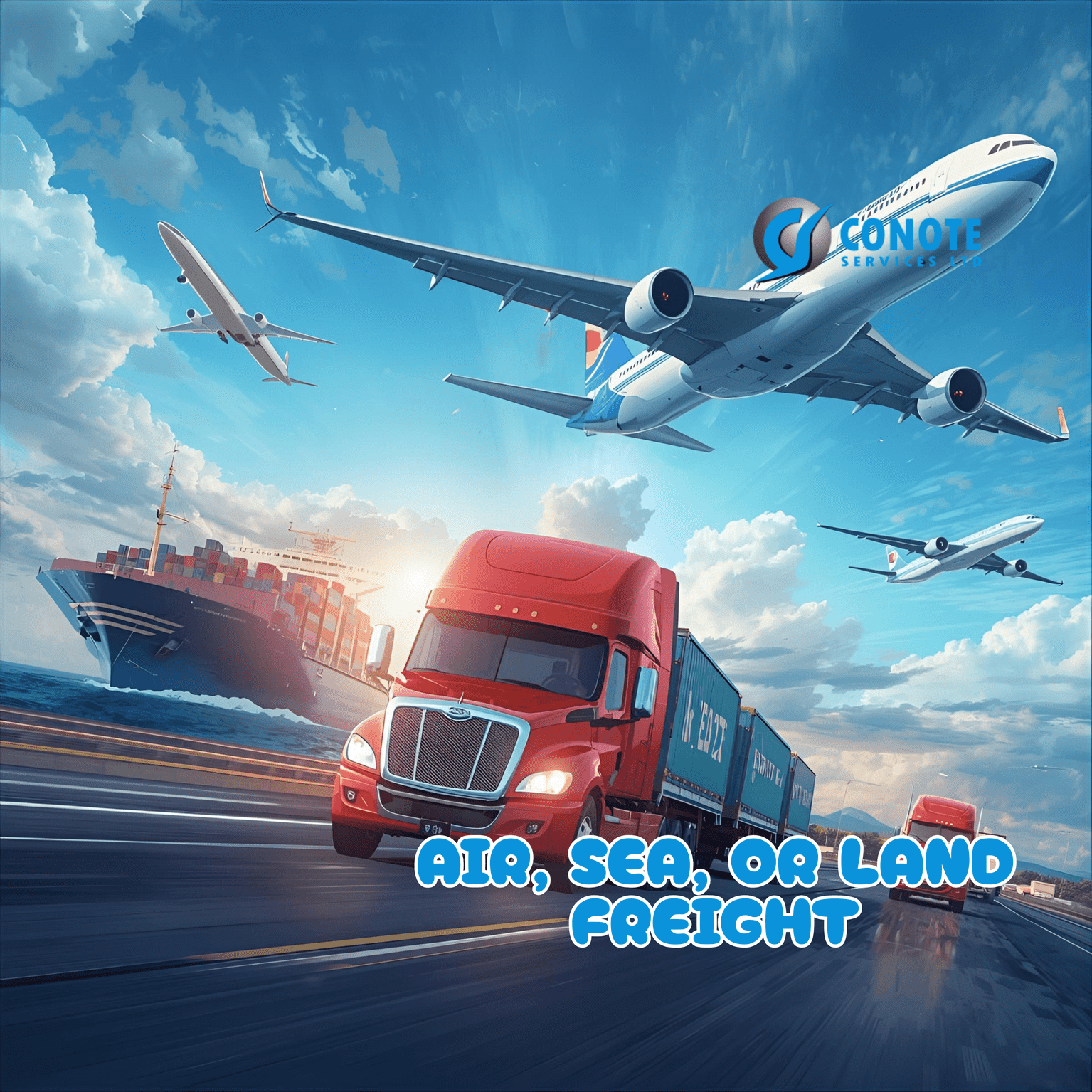
For supply chain management and logistics, choosing the right transport method can make or break your business’s efficiency. When shipping products, choose between air, sea, or land freight based on cost, speed, reliability, and customer satisfaction. Each option has its pros and cons.
Knowing Air Freight
Air freight becomes the choice when time is of the essence. Air shipping is ideal for perishables, high-value, or time-sensitive items as it ensures timely and safe delivery, unlike sea or land freight which may have delays.
All that being stated, air freight is pricier than sea or land shipping, and weight restrictions can limit shipment volume. Despite that, companies generally view air freight as an investment towards customer satisfaction and supply chain efficiency. Quick delivery mechanisms sustain the global economy, and the gap is filled with success by air freight.
Sea Freight Explained
For large, massive, or bulky consignments, sea freight is the most economical mode. Shipping containers that can carry massive quantities of products transport consignments, making this mode appropriate for businesses that need to move raw materials, equipment, or consumer goods in bulk. Sea freight is more scalable and economical than air or land freight.
The prime compromise of sea freight is time. Even though it is cost-effective, it is weeks or even months before the goods reach their point of destination based on the trade route. Business firms using sea freight have to make advanced scheduling and factor in longer lead times in their supply chain. Despite all this constraint, global trade still utilizes sea freight since it satisfies the compromise of cost against capacity.
The Flexibility of Land Freight
When it comes to shipping commodities within cities, between countries, or even across state lines, land freight offers flexibility and door-to-door access that air or sea freight cannot always provide. Trucks and trains can deliver goods to a customer’s doorstep, making it the backbone of domestic business and last-mile delivery.
As compared to air freight, land transport is slower but tend to be less expensive and adaptable. As compared to sea freight, it does not require port terminals, thereby making it accessible for regions that are not close to coastal lines. Land freight also gives a higher level of control over route planning, which makes it suitable for businesses that need high-frequency and adaptive transports.
Costs Comparison: Air, Sea, or Land Freight
Cost is quite likely one of the solitary most important variables when selecting sea, air, or land freight. Air freight is obviously the most expensive, then land freight, with sea freight being the cheapest. However, cost must not be considered independently. Speed, amount of freight, and destination are equally important when determining overall value.
For example, while sea transport seems cheaper, missed business opportunities could result if the market receives your product too late. Conversely, while air transport is costly, it could reduce storage costs by enabling just-in-time delivery. Therefore, businesses need to weigh the cost implications of every mode of transport before making a choice.
Delivery Speed and Reliability
In comparison to air, sea, or land freight, speed of delivery is crucial. Air freight ensures quick delivery but is prone to interference by weather and air traffic control. Sea freight is consistent but time-consuming, which can be a challenge to high-speed business. Land freight offers average speed, but traffic congestion, customs clearance, or road conditions cause regular delays.
Reliability is a factor too. Air freight is on an exact schedule, while sea freight is generally reliable but prone to port blockage. Land freight reliability is dependent mostly on infrastructure and border control policy. Businesses have to balance these against their wish for timely delivery.
Environmental Considerations
Companies cannot afford to ignore the environmental implications of air, sea, or land freight in our modern world. Air freight has the highest carbon footprint according to fuel usage, while sea freight is comparatively more eco-friendly per ton but contaminates sea life. Land freight comes in between, depending on whether products are transported by trucks or trains.
Companies moving towards sustainability have a tendency to combine modes of transportation with the aim of reducing their carbon footprint. Long haul bulk transfers, for example, can be transported by sea freight and end distribution through land freight to harmonize efficiency and eco-responsiveness.
Role of Technology and AI in Freight Management
Choosing between sea, air, or land freight has now been made easier by improved logistics software and AI-powered insights. Artificial Intelligence can predict delivery schedules, route optimization, and even anticipate disruption caused by weather, strikes, or political instability. More informed decisions regarding the better-suited transport mode for their needs can be made by firms that leverage AI in their supply chain management.
The question is raised: How will the decision-making process for companies that are always faced with choosing air, sea, or land freight continue to be influenced by AI? The answer is data. Through AI analyzing real-time cost, risk, and performance data, companies are able to make decisions that are not only cost-effective, but future-proof as well.
Choosing the Right Partner
Choosing between air, sea, or land freight isn’t about transporting goods, it’s about matching logistics to your business objectives. Every one has its merits and demerits, and more often than not, the best strategy is to utilize a mix based on need.
That is where the expertise of a trusted logistics provider comes into play. At Conote Services, we understand the complexities of modern supply chains and help our clients make the right call every time. Whether your priority is cost, speed, reliability, or sustainability, our team ensures your cargo moves seamlessly across borders.
If you’re ready to simplify your logistics and maximize efficiency, reach out to Conote Services today. Together, it will be determined whether air, sea, or land freight is the best fit for your cargo, powered by expertise, technology, and commitment to your success.