

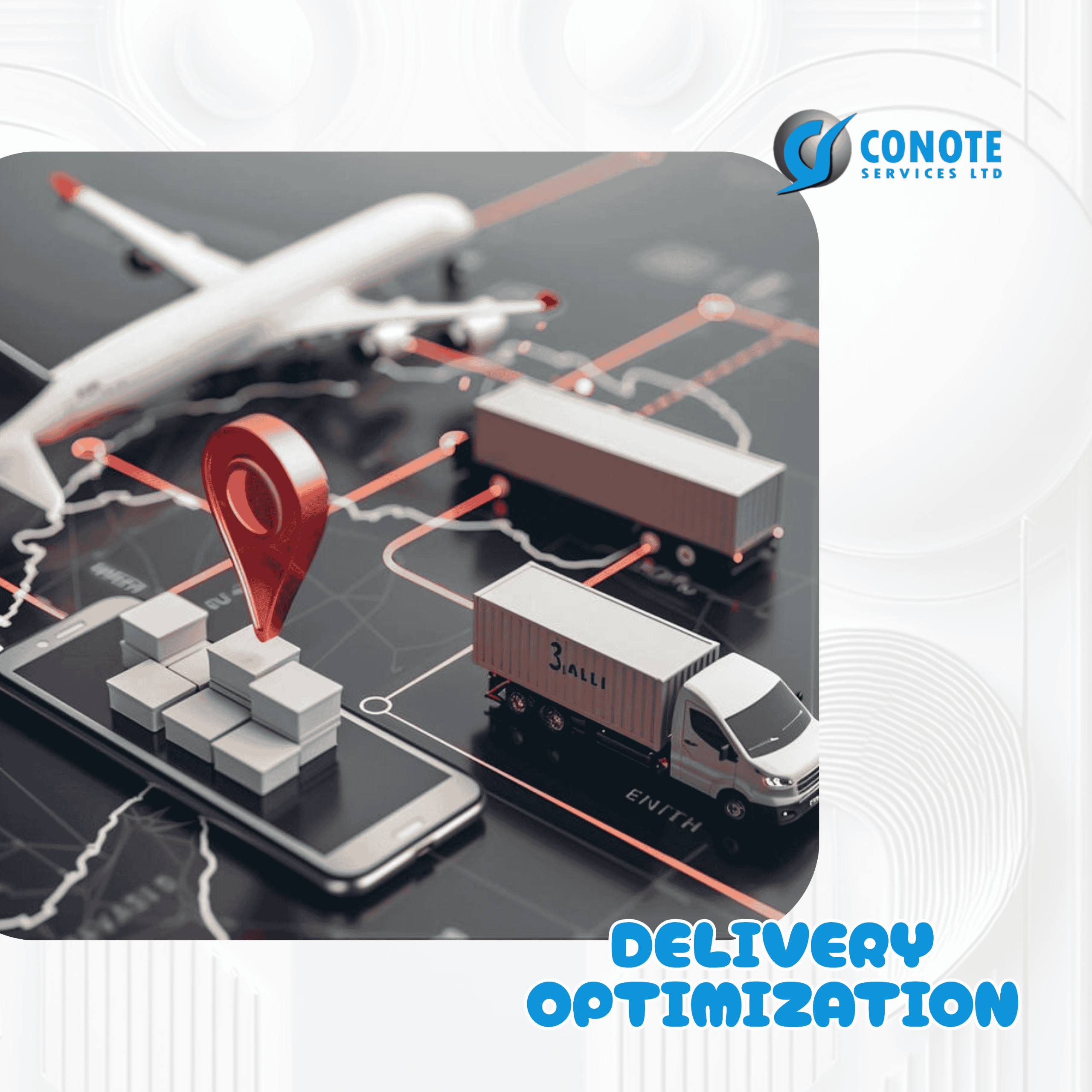
The last mile, or the final mile of delivery phases from a transportation hub to the ultimate customer, is a challenging task in Nigeria, particularly with its multiplicity of urban and rural centers. Effective delivery optimization is crucial for businesses to succeed, enhance customer satisfaction, and sustain competitiveness. This essay considers means of increasing the speed and reliability of last-mile delivery in Nigeria from the experience of companies like Conote Services and GIG Logistics and concludes with a call to leverage the experience of Conote Services in this strategic dimension.
Navigating the Nigerian Terrain: Strategies for Delivery Optimization
Nigeria’s infrastructure presents unique challenges to last-mile delivery optimization. Congested urban centers, poor road networks in rural areas, and security complications all impact delivery speed and dependability. It takes a multi-prong approach to address these intricacies
Technological Adoption: Technologies such as real-time monitoring, route optimization software, and electronic proof of delivery (ePOD) systems are essentials. These enable organizations to track deliveries, re-route in real time based on traffic flows or unforeseen delays, and provide customers with firm ETAs.
Strategic Location of Hubs: Strategically locating micro-hubs or fulfillment centers in urban areas reduces travel distances and shortens delivery times. Rural areas benefit from partnerships with local retailers or community centers, which offer distribution points and counter infrastructure limitations.
Diversification of the Fleet: Utilizing a mixed fleet of vehicles, from motorcycles, tricycles (Keke Napep), to small vans allows for efficient handling of congested roads and navigation into remote areas. Choice of vehicle should be based on topography and load volume.
Security Issues: Having robust security practices, such as GPS tracking, background screening of drivers, and cooperation with local security organizations, becomes extremely crucial in protecting drivers and shipment, particularly in high-risk geographies.
Data-Driven Decision Making: Analysis of delivery data to identify bottlenecks, optimize routes, and improve delivery schedules is essential to ensure continuous improvement. This entails tracking key performance indicators (KPIs) such as rates for on-time delivery, delivery costs, and customer satisfaction.
Conote Services and GIG Logistics: Real-Life Examples of Delivery Optimization
Companies like Conote Services and GIG Logistics are actively implementing innovative tactics for delivery optimization in Nigeria.
GIG Logistics, for example, utilizes broad technology through its GIGGO application, which connects customers to a pool of drivers and offers real-time tracking and delivery status. It has also invested in strategically located hubs across the country to speed up deliveries.
Conote Services focuses on providing tailored delivery solutions to businesses, understanding that one size fits all is not an option. They assess client-specific needs, analyze the logistics problems, and come up with tailored delivery optimization solutions that involve technology, optimized routing, and secure delivery processes.
Delivering Across Rural Areas Through Delivery Optimization
Rural areas present unique challenges to delivery optimization due to poor road infrastructure, dispersed population, and limited access to technology. Companies in such areas must seek strategies to counteract these difficulties:
Partnerships with the Community: Engagement with local businesses, community influencers, and cooperatives can render last-mile delivery viable in rural areas. These can provide local knowledge, distribution networks, and secure storage space.
Mobile Technology Solutions: Using mobile technology to contact customers, track deliveries, and manage logistics operations is crucial in areas where internet connectivity is low.
Flexible Delivery Models: Flexibility in delivery models to serve rural customers’ needs, for instance, by suggesting schedules for deliveries, bunching shipments, or using point-of-distribution pick-ups, can make it more efficient and customer-friendly.
The Future of Last-Mile Delivery Optimization in Nigeria
The way forward for delivery optimization in Nigeria lies in embracing innovation and adopting a customer-centric approach. This entails leveraging new, new-age technologies such as drone delivery and electric vehicles, and investment in the training and growth of logistics professionals.
Conclusion: Engage Conote Services for Delivery Optimization Excellence
Effective last-mile delivery is no longer just a logistics function; it is a central element of the overall customer experience. Speed and consistency are only achievable in Nigeria’s challenging environment by adopting a considerate strategy, technological cohesion, and indigenous knowledge. Conote Services possesses the knowledge, skills, and customized solutions to enhance last-mile delivery operations for organizations of any size and form. By engaging Conote Services, organizations can save significant costs, increase customer satisfaction, and maintain their competitive edge in Nigeria’s business environment.
To learn how Conote Services can revolutionize your last-mile delivery operations and achieve business success, check our website or reach out to us today to schedule a consultation. Let us guide you through the intricacies of the Nigerian logistics arena and attain delivery optimization greatness.