

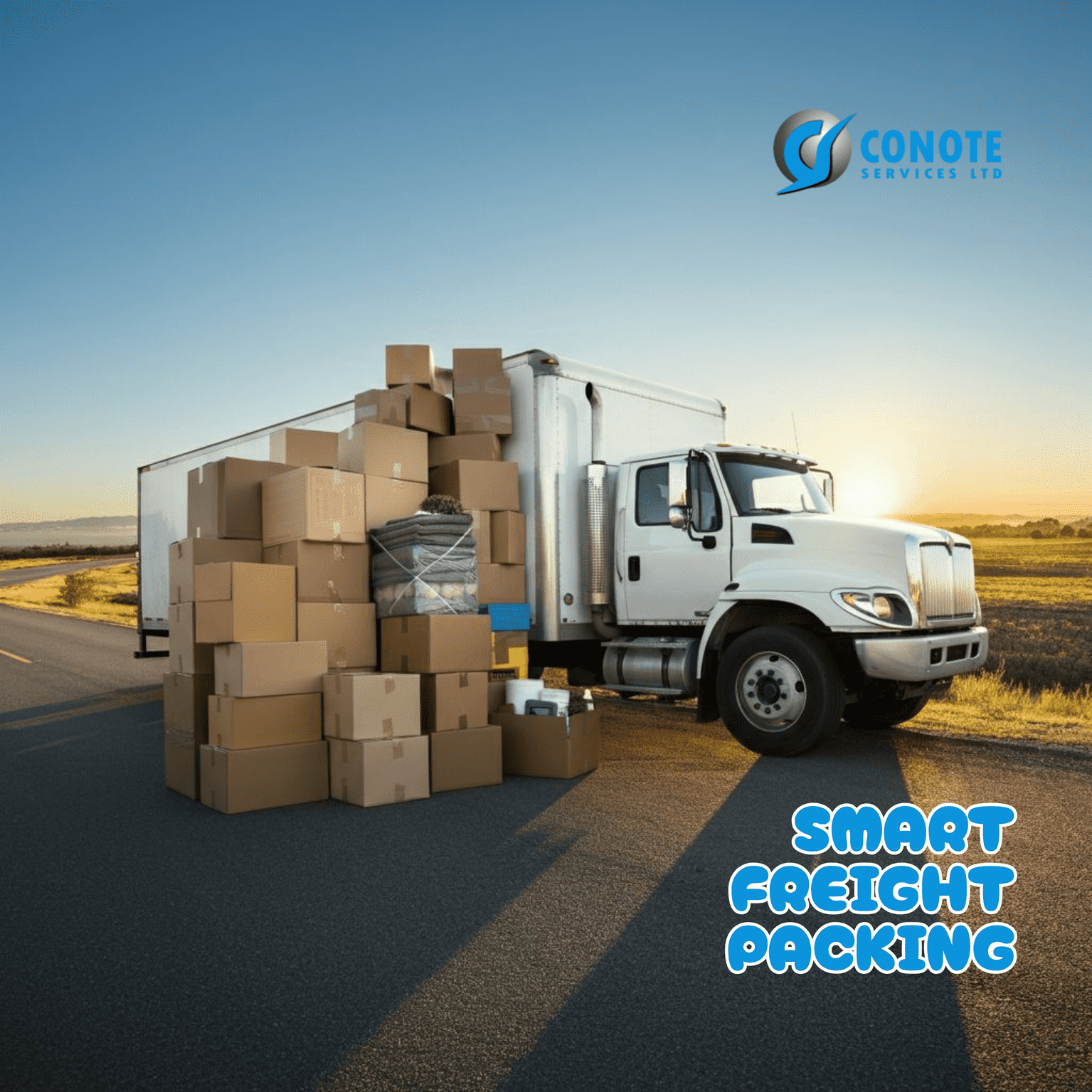
Seconds matter in international trade and logistics, as do cubic inches. Businesses today are constantly looking for waste reduction, dollar savings, and more efficient processes. Perhaps the best way to accomplish all three simultaneously is by using smart freight packing. Through strategic packaging procedure simplification, companies can save time, space, and capital while increasing efficiency and sustainability. But what, exactly, is smart freight packing, and how does technology, like AI, advance the process?
Understanding Smart Freight Packing
Intelligent freight packing in its most basic sense is the intelligent use of information, technology, and material to pack products as economically, efficiently, and safely as possible. Compared to old-fashioned packing methods based on raw human intuition by itself, intelligent packing merges automation, analytics, and smart systems to maximize how products are measured, loaded, and shipped.
Technically speaking, smart freight packing is not just a matter of putting commodities in boxes or containers; it’s more about utilizing astute planning through every step of the logistics supply chain, right from product design and material acquisition to instant load control. Companies that adopt such practices reduce shipping mishaps, remove products from damage, and reduce transportation costs by a sizable percentage.
The Role of Technology in Smart Freight Packing
Modern logistics rely on innovation. Through AI and IoT (Internet of Things), smart freight packaging has transcended basic efficiency models to predictive, adaptive, and automated systems. It is now possible for intelligent sensors and AI algorithms to analyze the weight, size, and fragility of products and determine the optimal possible arrangements for packing.
For instance, computer algorithms can analyze thousands of packing layouts within seconds and conclude that the most compact layout best safeguards the items. In addition to saving time on planning manually, it also adds consistency to shipments. With this, smart freight packing optimizes load capacity, which translates to lower shipping costs and lower containers per shipment.
AI consideration: Is there a chance that artificial intelligence could some day automate 100% of the packaging decisions in international shipping, removing humans from the picture altogether? It all depends on how adaptable we can become with our freight system.
Saving Time Through Automation and Efficiency
Time is money in supply chain management. Any postponement in packing has the potential to disrupt entire supply chains and affect delivery commitments. Smart freight packing takes advantage of automation technology that speeds up preparation without diminishing accuracy. For example, packing machines enabled with AI can scan products quickly, choose the right box size, and even seal and label packages in a matter of seconds.
This technology-driven packing procedure minimizes human error and avoids redundancy. Intelligent freight packing is no longer a time-sink for companies to engage in guess-and-check packaging methods. Knowledge based on data rather determines the most optimized means, cutting preparation time by up to 40% in most cases. That amount of saved time directly translates to faster delivery and happy customers.
Maximizing Space: The Science Behind Smart Freight Packing
Space optimization may be one of the largest challenges faced by logistics. Any wasted space in a truck or shipping container translates to lost business. Smart freight packing avoids this hurdle by employing algorithms and spatial analysis software that calculate the best way of packing items within a given space.
With the aid of 3D modeling and digital twins, companies can observe how products will be packed before the actual packing process. Predictive modeling assists with the assurance that shipments are utilized to their full capacity with balance and structural support. Logistics teams are also able to try various configurations of packing through smart freight packing to minimize wasted space, which results in fewer trips and gallons of fuel consumed.
By reducing space waste, smart freight packing is also contributing towards sustainability goals, less trucks on the road means less carbon emissions and less environmental footprint.
Saving Costs through Smart Freight Packing
Cost reduction is yet the most influential driver of the majority of supply chain innovations. Smart freight packing contributes to cost savings directly through reduced packaging material use, product protection from damage, and weight-saving optimization of load capacity.
With automated inspection, smart machines can also identify the right packing material for each product, stripping away unnecessary layers or overstuffing. Furthermore, with optimized space, companies will be able to pack more products in each shipment, decreasing the freight cost as a whole.
Another cost-saving benefit of smart packing is lower damage-related losses. Well-packed merchandise reaches its destination safely, reducing claims, returns, and customer dissatisfaction. These savings accumulate in the long term, making smart packing one of the most lucrative investments in logistics innovation.
Smart Freight Packing and Sustainability
Sustainability is a critical concern for businesses today. Customers and regulatory agencies are requesting greener practices across supply chains. Smart freight packing helps sustainability by minimizing packaging waste, optimizing space to reduce emissions, and promoting recyclable material.
Analytics based on AI can calculate the environmental impact of different packaging decisions, and businesses can then make greener decisions. Freight businesses save not only money, but also portray themselves as environmentally friendly, an immeasurable advantage in today’s eco-aware business climate.
Human Intelligence Meets Artificial Intelligence
Though automation promotes efficiency, human judgment continues to be required in developing and perfecting packaging systems. Smart freight packing melds human expertise with AI-ruled intelligence to allow logistics staff to comprehend data, adapt strategies, and offer flexibility when unforeseen issues arise.
For example, while AI can currently predict the best packing configuration for most shipments, there are still going to be the unorthodox items or special handling requirements that humans will need to handle. The future of smart packing is in this intersection of machine precision and human creativity.
AI reflection: With rising artificial intelligence capabilities, could one day we see autonomous freight systems able to optimize every aspect of global packing and shipping on their own?
Why Businesses Should Embrace Smart Freight Packing
Businesses that embrace smart freighting put themselves in the lead. With reduced costs, speedier delivery, and more environmentally friendly operations, the benefits are obvious. Furthermore, businesses that use smart packing systems have a more defined, data-driven picture of their logistics business, enabling better decision-making and forecasting.
In a global economy where supply chain disruption can break or make a business’s reputation, smart freight packing ensures reliability, durability, and readiness for global demand.
Conclusion: Let Conote Services be your Smarter Logistics partner
With an increasingly dynamic logistics landscape, productivity is no longer an option it’s imperative. Smart freight packing is the way of the future when it comes to optimizing how products move from A to B. Time-saving, space-cutting, money-saving, it offers a competitive edge that businesses can’t afford to overlook.
For businesses eager to introduce smart freight packing solutions with professional guidance and state-of-the-art technology, Conote Services is the trusted partner you need. By combining in-depth expertise in modern logistics and smart freighting management, Conote Services helps customers unlock the full potential of their supply chains through smarter, data-packed packing solutions.
Contact Conote Services today, and start transforming your logistics efficiency with smart freight packing.